

Making AI Tangible for Latvia's Public Sector Workshop Facilitation — Viedo risinājumu kalve (Smart Solutions Forge)
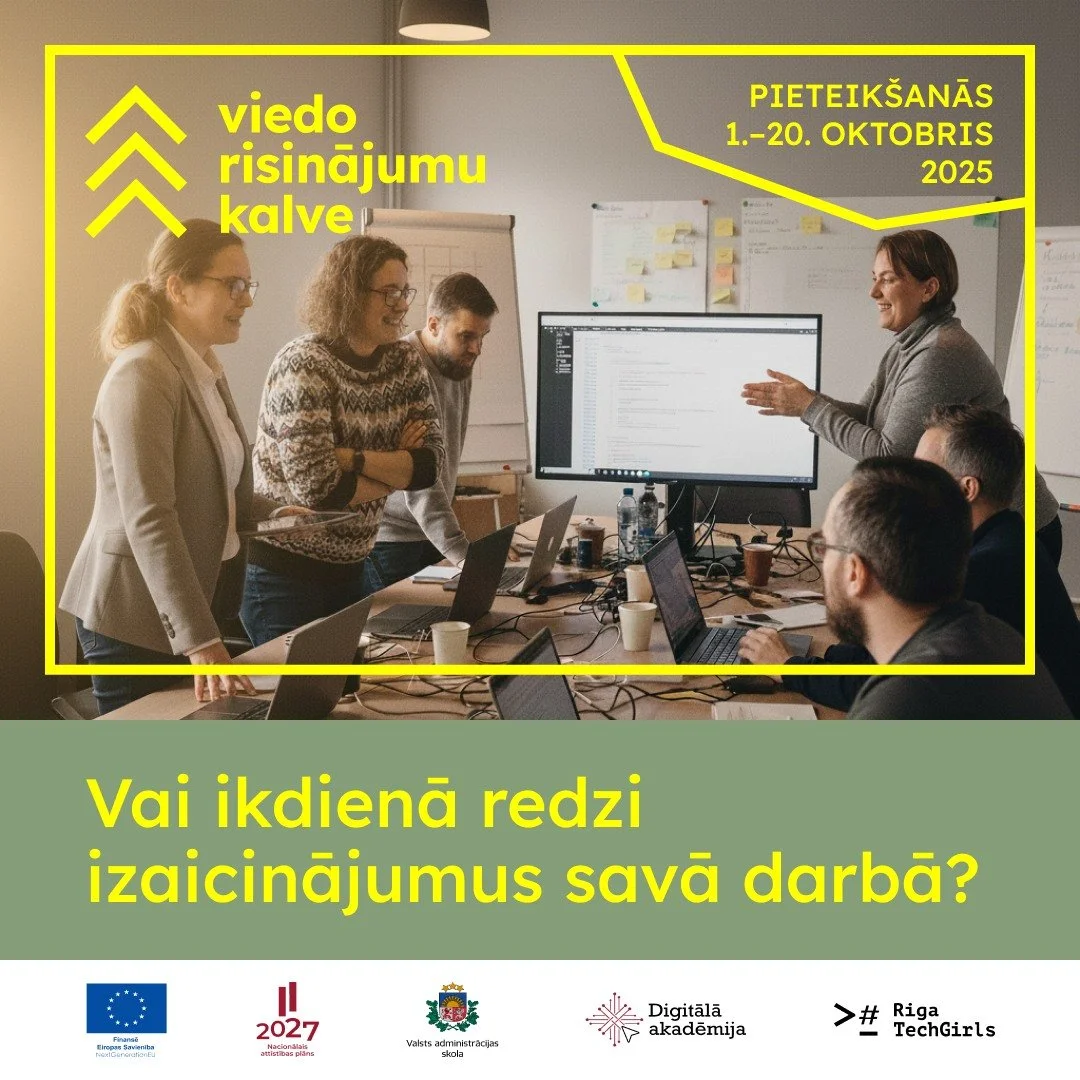
Viedo risinājumu kalve is a national innovation initiative run in collaboration between Latvia's State Administration School and Riga TechGirls, funded by the EU Recovery Fund. Its goal: help public sector employees transform real workplace challenges into working digital and AI-powered prototypes.
I was brought in as a facilitator during Cycle 1 of the programme, at a pivotal moment — teams had completed initial user testing of their AI prototypes and now needed to make sense of what they had learned and translate it into concrete improvements.
The Challenge
The room was as diverse as it gets. Around 40–50 participants across 15 teams, representing institutions ranging from the unemployment agency to municipal offices in smaller cities across Latvia. Different organisations, different mandates, different levels of digital confidence — and different ages. Some participants were already comfortable experimenting with AI; others were cautious, uncertain, or simply unfamiliar with the tools they were being asked to improve.
The challenge wasn't just facilitation — it was creating conditions where every team, regardless of background, could do meaningful work in the same room at the same time.
The Approach
I opened with a short grounding in design thinking and AI — enough shared context to give the room a common language — followed by a brief live demo to make the technology tangible for even the most hesitant participants.
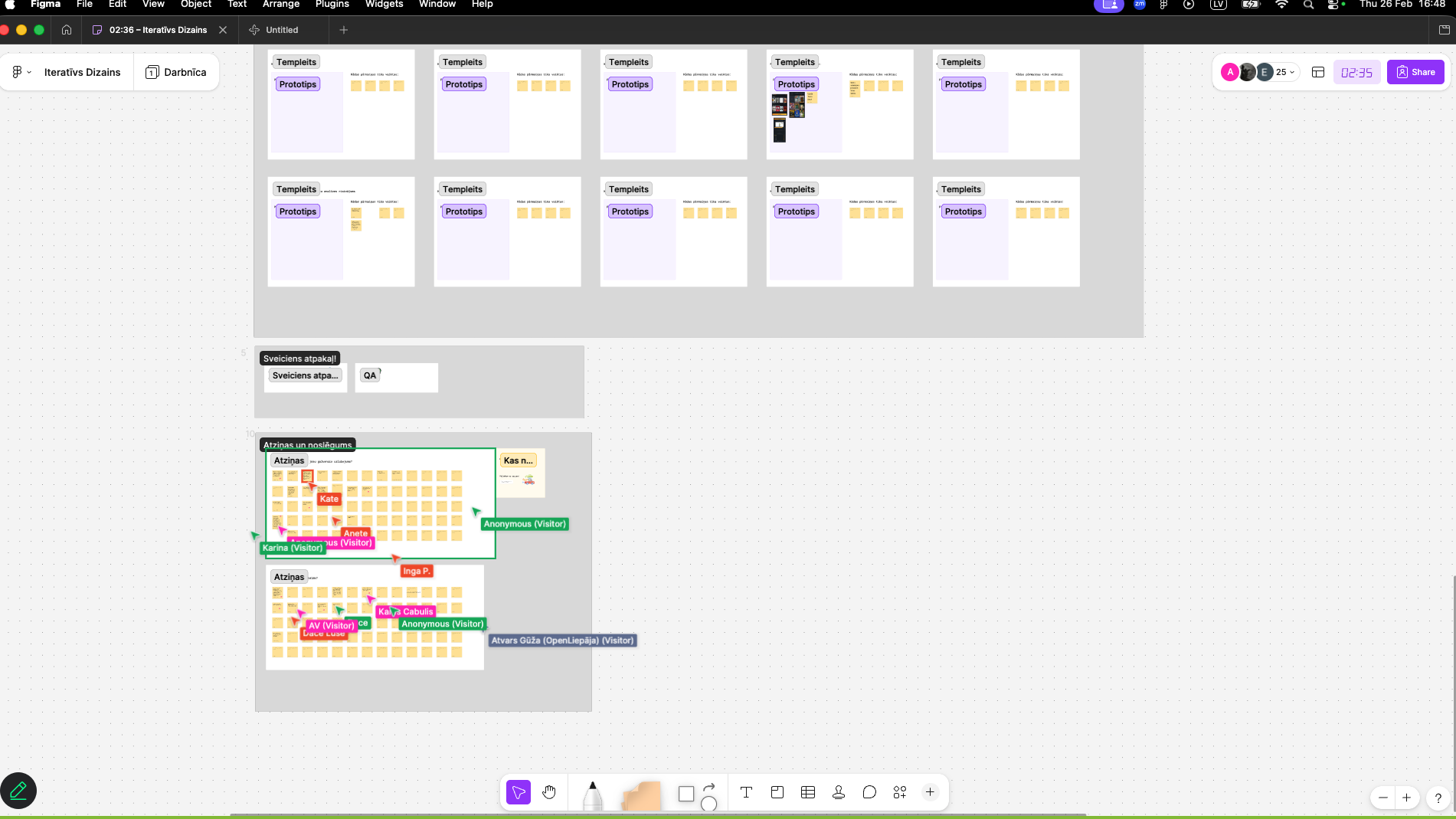
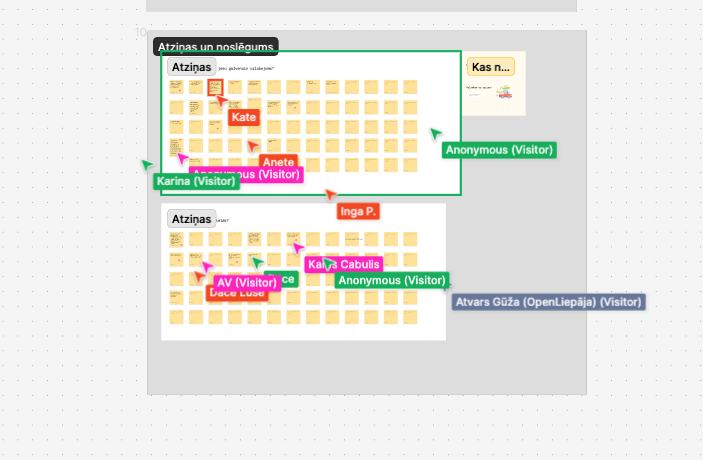
From there, the session moved through two structured exercises. First, I guided teams through synthesising their user testing findings on a matrix, then through prioritising which insights were most significant to act on. I moved between breakout rooms throughout both exercises, keeping teams unblocked and the energy up across a very diverse group.
The final part brought it all together: teams used their prioritised insights to make concrete improvements to their AI prototypes — the hardest step for teams new to iterative design, and the one that needed the most hands-on support in the room.
The Outcome
By the end of the session, all 15 teams had moved from raw user testing insights to prioritised improvement directions for their prototypes — a tangible step forward in a programme where momentum matters. Participants who had come in uncertain about AI left with something concrete they had built or decided themselves, which is always the more lasting kind of learning.
What this reflects
This project sits at the intersection of the work I find most meaningful: helping people who don't think of themselves as "tech people" find their footing with new tools — and building the kind of facilitation structure that makes that possible across a whole room at once.
“A big thank you for facilitating yesterday's workshop! It went really well and the participants were actively engaged. :)”
— Pauls, Riga Tech Girls